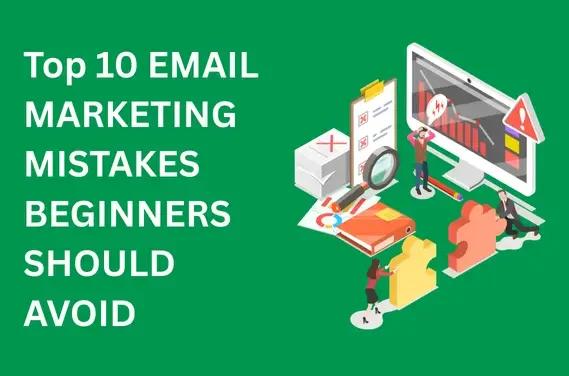
Top 10 Email Marketing Mistakes Beginners Should Avoid
Introduction
Email marketing is a vital component of any business’s marketing strategy. When done right, it allows you to communicate directly with your audience, increase customer loyalty, and drive conversions. However, beginners often make mistakes that can hinder their success. Understanding common email marketing mistakes to avoid is essential for beginners who want to create effective campaigns that build trust and grow their business.
1. Failing to Segment Your Email List: Why One-Size-Fits-All Campaigns Don’t Work
A common mistake in email marketing is sending the same email to every subscriber on your list. Segmenting your email list ensures that your messages are more personalized and relevant to each recipient, resulting in better engagement and higher conversions.
Key Benefits of Segmentation:
- Higher open and click-through rates: Targeted emails are more likely to resonate with your audience.
- Improved customer experience: Personalization makes subscribers feel valued and understood.
- Better conversion rates: Sending relevant offers to the right people increases the chances of conversion.
How to Segment Your List:
- Demographics: Segment by age, gender, location, etc.
- Behavioral Data: Segment based on past purchases or website interactions.
- Engagement Levels: Segment into active vs. inactive subscribers.
2. Neglecting Mobile Optimization: How a Poorly Designed Email Kills Your Engagement
With over 50% of emails being opened on mobile devices, neglecting mobile optimization is a huge mistake. If your emails aren’t mobile-friendly, they may display incorrectly, leading to a poor user experience and ultimately causing potential customers to unsubscribe.
Key Mobile Optimization Tips:
- Use responsive design: Make sure your email layout adapts to different screen sizes.
- Keep subject lines short: Since mobile screens are smaller, concise subject lines perform better.
- Optimize buttons and CTAs: Ensure buttons are easy to click, even on small screens.
- Use large, readable fonts: Avoid tiny fonts that are hard to read on mobile devices.
3. Overloading Your Emails with Text: How to Keep Your Messages Short, Sweet, and Effective
Too much text can overwhelm your readers, causing them to lose interest or click away. A concise, clear, and scannable email is much more likely to be read and acted upon.
Best Practices for Email Copy:
- Keep it concise: Aim for a clear and concise message, ideally under 200 words.
- Use bullet points: Break up information into digestible chunks.
- Create a scannable layout: Use headings, short paragraphs, and bold text to make key information stand out.
- Focus on one core message: Each email should have one clear purpose (e.g., promoting a product, providing valuable content).
4. Ignoring Email Analytics: How Not Tracking Performance is Costing You Sales
Email marketing without data tracking is like driving without a GPS. To refine your campaigns and improve your results, you need to monitor key metrics like open rates, click-through rates, and conversions. For beginners who find analytics overwhelming, Brevo email marketing support can help explain performance data and guide improvements in campaign strategy.
Key Email Metrics to Track:
- Open Rate: Shows how many subscribers opened your email.
- Click-through Rate (CTR): Indicates how many recipients clicked on your CTA or links.
- Bounce Rate: Measures how many emails failed to be delivered.
- Conversion Rate: Tracks how many recipients took the desired action (purchase, sign-up, etc.).
How to Improve with Analytics:
- Test different subject lines, CTAs, and designs to see what resonates best with your audience.
- Identify high-performing emails and replicate their success in future campaigns.
5. Lack of a Clear Call-to-Action (CTA): Why Your Emails Are Leaving Readers Confused
Every email you send should have a clear call-to-action (CTA) telling recipients what action you want them to take. Without it, your email lacks direction, and the reader may not know what to do next.
Best Practices for CTAs:
- Keep it simple: Use action verbs like “Shop Now,” “Learn More,” or “Get Started.”
- Make it stand out: Use a contrasting color for your CTA button to draw attention.
- Limit CTAs: Stick to one primary CTA to avoid confusing the reader.
- Use urgency or scarcity: Phrases like “Limited Offer” or “Last Chance” create urgency and encourage immediate action.
6. Sending Too Many Emails: How to Find the Perfect Email Frequency Without Annoying Your Subscribers
While consistent communication is key, sending too many emails can overwhelm your subscribers and lead to higher unsubscribe rates. Finding the right frequency is essential for maintaining engagement without annoying your audience.
How to Find the Right Frequency:
- Test different frequencies: Experiment with sending emails once a week, biweekly, or monthly to see what works best for your audience.
- Respect your audience’s preferences: Allow subscribers to choose their email frequency during the sign-up process.
- Quality over quantity: Focus on sending valuable, relevant content rather than overwhelming subscribers with excessive emails.
7. Not Personalizing Emails Enough: Why Generic Messages Don’t Build Relationships
Personalization is a critical factor in email marketing success. Generic, one-size-fits-all messages fail to capture attention, while personalized emails make the reader feel valued and connected to your brand.
Personalization Techniques:
- Use the subscriber’s name: Addressing your subscribers by their name creates a personal connection.
- Tailor content based on behavior: Send emails based on past purchases, website behavior, or engagement with previous emails.
- Send relevant offers: Personalize product recommendations based on the subscriber’s preferences or browsing history.
8. Not Testing Your Emails: Why A/B Testing is Crucial for Improving Your Campaigns
A/B testing allows you to compare different versions of your emails to see which one performs better. Without testing, you’re essentially guessing about what works. When testing uncovers delivery or setup issues, referring to Brevo support can help resolve technical problems before campaigns are sent to a wider audience.
Elements to Test in Your Emails:
- Subject Lines: Test different variations to see which one leads to more opens.
- CTA Buttons: Try different wording, colors, and placement to improve click-through rates.
- Email Copy: Experiment with various tones, lengths, and formats to determine what resonates best with your audience.
How to Implement A/B Testing:
- Split your email list into two groups.
- Send two versions of your email with one key difference (e.g., different subject lines).
- Analyze the results and use the winning version for future emails.
9. Neglecting Email List Hygiene: Why Keeping Your List Clean Saves You Time and Money
Keeping your email list clean and up-to-date is essential for successful campaigns. A messy list full of inactive or invalid emails can hurt your deliverability and increase bounce rates.
Tips for Maintaining List Hygiene:
- Remove inactive subscribers: Periodically clean your list by removing subscribers who haven’t engaged with your emails in a while.
- Use double opt-in: Ensure that subscribers genuinely want to receive your emails by using a double opt-in process.
- Keep your list updated: Regularly update your list to remove invalid or incorrect email addresses.
10. Not Complying with Legal Regulations: How Ignoring Email Marketing Laws Can Hurt Your Business
Ignoring email marketing laws like GDPR or CAN-SPAM can lead to legal issues, hefty fines, and damage to your brand reputation. Compliance is not only about following the rules—it’s about building trust with your audience.
Key Legal Regulations to Follow:
- GDPR (General Data Protection Regulation): Ensure you’re collecting and handling subscriber data responsibly, especially if you’re targeting EU residents.
- CAN-SPAM Act: Make sure every email includes an unsubscribe option and that your email content is truthful.
- Opt-In Consent: Always obtain consent before sending promotional emails.
Key Takeaway
By avoiding these common email marketing mistakes, you can improve engagement, build stronger relationships with your audience, and ultimately drive more conversions. Remember, the key to success lies in personalization, consistency, and continuous optimization.
Conclusion
Avoiding the mistakes listed above will help you build a more successful and sustainable email marketing strategy. Take the time to optimize your campaigns, and you’ll see better engagement, higher sales, and stronger relationships with your audience.
FAQs
Q1: What’s the best frequency for sending marketing emails?
It depends on your audience, but typically, sending one to two emails per week is a good starting point. Test different frequencies to find what works best.
Q2: How do I know if my emails are mobile-friendly?
Use email marketing platforms that offer responsive design or test your emails across different devices to ensure they display correctly.
Q3: Can A/B testing improve my email open rates?
Yes! A/B testing subject lines, CTAs, and email copy can significantly improve your open rates and overall campaign performance.